

Purchase
Financing a home purchase in Florida
A purchase mortgage is the loan you use to buy a home. The interesting part is not the loan itself — it is the interaction between price, down payment, rate, term, taxes, and insurance, because in Florida the last two move the payment more than most buyers expect.
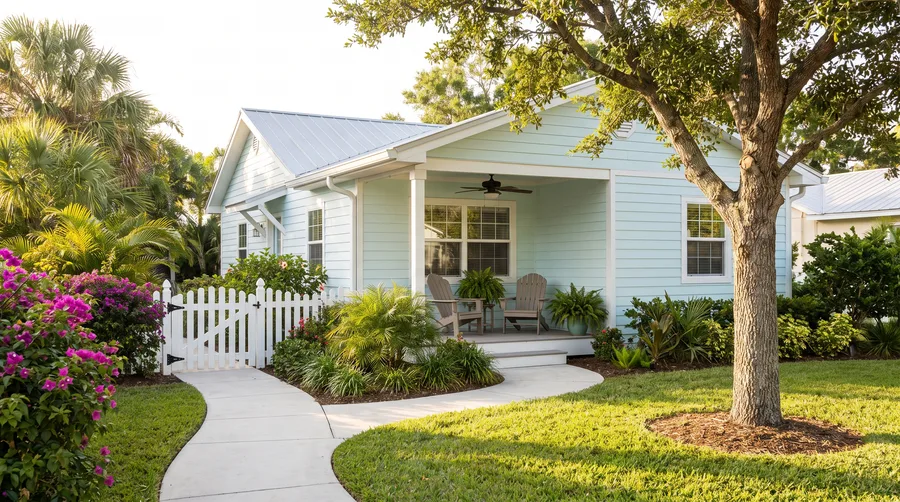
This may fit if
- You are buying a primary residence, second home, or investment property
- You want to understand your realistic payment range before you write offers
- You need to know how much cash you actually need at closing, not just the down payment
Look at alternatives if
- You already own the home and want to change your rate or term — that is a refinance
- You are buying with cash and only want a comparison of the tradeoffs
How it works
You establish a realistic budget
Start with the full monthly cost, not the principal and interest alone. In Florida, property taxes, homeowners insurance, wind coverage, flood coverage where applicable, and HOA dues frequently add more to the payment than buyers plan for. The payment calculator lets you enter each one separately so you can see which line is driving the number.
You get a conversation, then a documented review
A licensed loan originator reviews your income, obligations, credit profile, assets, and timeline. That conversation is what turns a calculator estimate into an actual set of options, and it is the point at which real program eligibility can be assessed.
You apply through a secure system
The application itself happens in the approved secure system, not on a marketing form. That is where documents belong, and it is where the required disclosures are issued and tracked.
The lender underwrites and you close
The lender verifies what was represented, orders an appraisal, and issues conditions. Timelines depend on the lender, the property, and how quickly documentation is returned.
What moves the outcome
- Down payment
- Changes the loan amount, whether mortgage insurance applies, and often the pricing. It is not the same as cash to close.
- Credit profile
- Affects which programs are available and how a loan is priced. Different programs weigh it differently.
- Debt-to-income ratio
- Your existing monthly obligations reduce the housing payment a lender will support. Paying off a small balance sometimes matters more than a larger down payment.
- Property type and occupancy
- A condo, a manufactured home, a second home, and an investment property are each underwritten differently. Florida condo financing in particular has its own project-level review.
- Insurance
- Florida homeowners and wind premiums vary enormously by county, construction, roof age, and carrier. Get a real quote early; an assumed premium can move your qualifying payment materially.
Questions people actually ask
How much do I need for a down payment?
It depends entirely on the loan program, the property, and your profile. Several programs allow far less than twenty percent. The more useful question is how much total cash you need at closing, which includes closing costs and prepaid items — the closing cost calculator breaks that down.
Does using a broker cost more than going to a bank?
Not inherently. A broker works with multiple lenders, which means comparing options rather than being limited to one institution's products. What a specific transaction costs depends on the lender and the loan; we will show you the actual figures before you commit to anything.
Can you tell me my rate today?
Not from a web page. Rates move daily and price differently depending on credit, loan-to-value, property type, occupancy, loan amount, and lock period. Anyone publishing a single rate without those inputs is showing you an advertisement, not your rate.
Sources
Program rules change. These are the primary sources this page is written against and the ones we check before advising anyone.
- Mortgages — buying a house — Consumer Financial Protection Bureau
Last reviewed 17 August 2026.
Talk it through with someone licensed
The page above is education. Your actual options depend on your full picture, and that takes a conversation. No credit pull, no application, no obligation.